
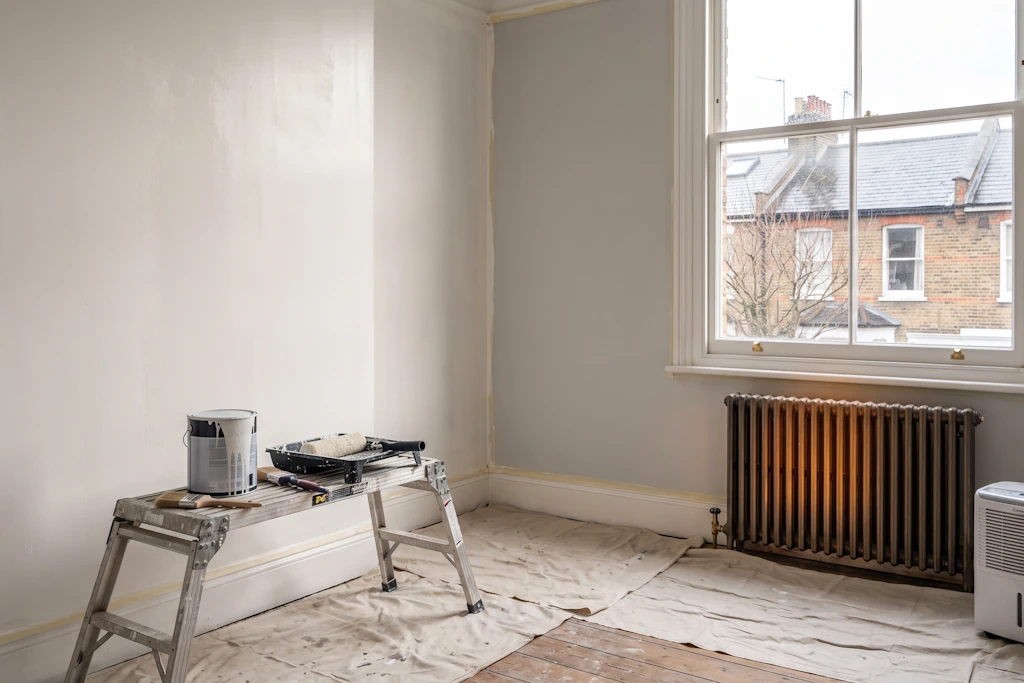
Can You Paint Indoors in Winter in the UK? Temperatures, Drying Times and Tips
Can you paint indoors in winter in the UK?
Yes, you can paint indoors in winter in the UK. The season does not matter. The room does. If the air and walls stay above 5°C and the room is not damp, the paint will dry and cure properly.
Check the tin first. Most emulsions list a minimum application temperature of 5°C, and some ask for 8°C or more. Walls on the north side of a house can run colder than the air, so feel them before you start.
What cold air does to wet paint
Paint has to lose moisture to form a hard film. Cold, damp air slows that down. You can end up with a tacky surface that marks easily, drips and sags on the wall, and a patchy finish where one coat dried faster than the next.
These are typical drying times in normal room conditions. Cold rooms need longer, so treat them as minimums:
- Emulsion: touch dry in 1 to 2 hours, recoat after 2 to 4 hours
- Water-based gloss or satin: recoat after 4 to 6 hours
- Solvent-based gloss: up to 16 hours between coats
In a cool room, double those gaps and leave the final coat overnight. Brands differ, so the tin has the last word.
How to get a cold room ready for paint
Heat the room before you start
Run the heating for a day beforehand and aim for a steady 15°C or above. Keep it on while you paint and through the night. Switching it off once you finish lets the room cool before the paint has set.
Keep moisture under control
Winter air indoors carries moisture from cooking, showers and drying laundry. Gas and paraffin heaters add more. Open a window for short spells, run a dehumidifier if you own one, and wipe condensation off window frames before you paint them.
Do not point a fan heater at a freshly painted wall. It dries the surface too fast and can cause cracking.
Winter painting mistakes that spoil a finish
- Painting a wall that feels cold or damp to the touch
- Recoating too soon because the surface feels dry
- Judging the colour under lamps, when you should check it in daylight the next morning
- Skipping prep, such as treating mould or letting new plaster dry fully (this can take several weeks) before a mist coat
Short days make the third one easy to miss. By 4pm the light has gone, and every flaw looks fine under a ceiling bulb.
When it is better to wait
Hold off if you can see black mould, water stains or condensation running down the walls. Paint will not fix those, and it will peel. Find the cause first, whether that is a leak, poor ventilation or a cold patch in the wall.
If a room cannot reach 5°C even with the heating on, wait for a milder spell.
How Toms Decor handles winter repaints
Toms Decor paints interiors through the winter. We check the room temperature and the state of the walls before we open a tin, plan each coat around the drying time of the paint we are using, and tell you plainly if a room is not ready. Getting the timing right is most of the job, and it saves you repainting in spring.
Winter indoor painting FAQ
What is the lowest temperature for painting indoors?
Most paints need at least 5°C, measured in the room and ideally on the wall. A few products ask for more, so read the tin.
Can I paint with the heating off?
Only if the room stays above the paint’s minimum temperature. In practice, a cold house in winter rarely does. Gentle, steady heating gives a better result.
Does paint dry slower in winter?
Yes. Cold and damp air slow evaporation, so expect drying and recoat times to roughly double. Leave the last coat overnight before you move furniture back.
Can I use a heater to speed up drying?
Use background heating, not direct heat. A fan heater aimed at the wall can crack the film, and gas or paraffin heaters add moisture to the room.
Painting indoors in winter works with a little planning
So, can you paint indoors in winter? Yes. Keep the room warm, keep it dry, and give each coat longer than the tin suggests. Do that and a winter repaint will look as good as a summer one.
