
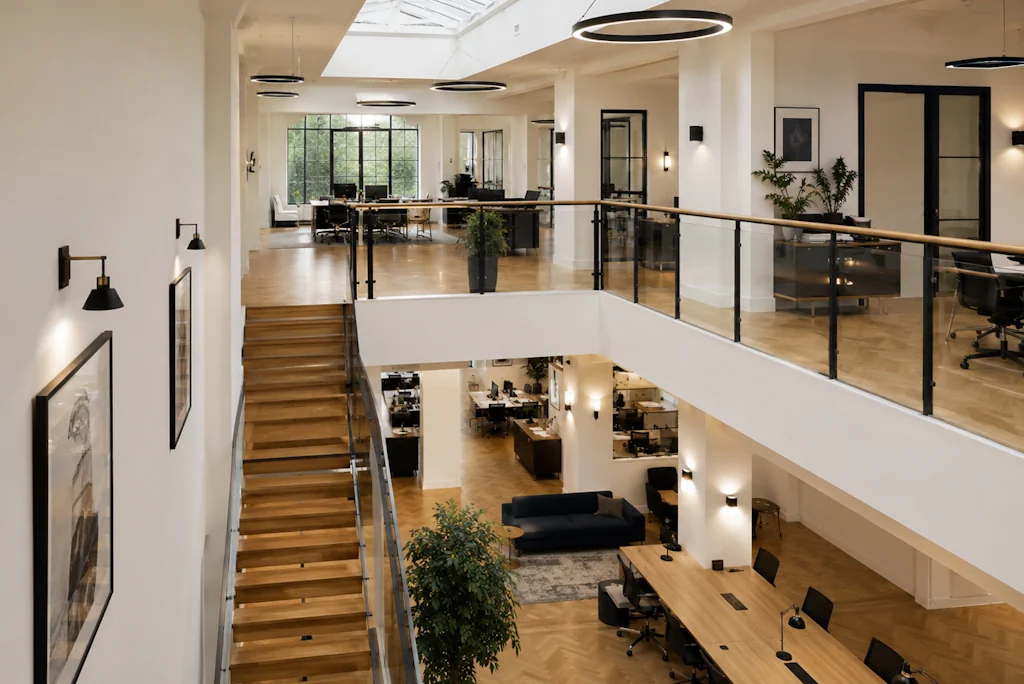
How to plan a phased office redecoration across multiple floors
A multi-floor refresh sounds simple until you try to keep people working while the walls get painted around them. The fix is to treat the whole building as one plan, then split that plan into stages your business can actually live with. Get it right, and nobody loses a full working day. Get it wrong, and you end up with three half-finished floors and a finance team that stops returning your calls.
Walk every floor before you plan a thing
Start with a proper survey. Measure each floor. Note the state of the walls, ceilings and skirting. Flag anything that needs fixing before a brush goes near it. Damp patches, cracked plaster and tired wiring all cost more when you find them halfway through a job rather than before it starts. Take photos of the problem spots and keep one simple sheet per floor. This first walk tells you which floors need the most attention and which can sit tight for now.
Decide the order of the floors
You rarely paint every floor at once. Pick a running order around three plain questions. How worn is each floor? How many people sit there? Can you move those people somewhere else for a week? Plenty of firms start at the top and work down, so dust never falls onto a floor they have just finished. Others begin with the quietest floor and treat it as a dry run before they tackle the busy areas.
Build a timeline people can trust
Block the programme out floor by floor, and leave a gap between each stage. Paint needs drying time, and a rushed second coat looks rushed for years. A single floor usually takes a working week once you count prep, two coats and skirting, plus a day either side to clear desks and put them back. Share the dates early. Teams can then book a room elsewhere or work from home on the loud days, and the grumbling stays low.
Keep the business running
Noise, fumes and blocked corridors wear people down fast. Push the messiest jobs into evenings or weekends, where the budget stretches to it. Use low-odour paint anywhere near occupied desks. Screen off the active zone so dust stays where it belongs. Tell staff what is happening and when, in plain words, and most of the complaints never arrive.
Pick a colour scheme that works on every floor
A common slip is to paint each floor a different bold shade and end up with a building that looks like a sample card. Keep one quiet base across the whole place, then switch a single accent per floor so people always know where they are. Here is a scheme that suits most offices:
Soft White for the bulk of the walls. It keeps rooms bright and makes a small floor feel bigger.
Warm Grey for lift lobbies and corridors. It hides scuffs far better than a flat white.
Sage Green as a calm accent for quiet rooms and breakout corners.
Deep Navy for one feature wall per floor. It works well behind a reception desk or a screen.
Muted Terracotta as a warm accent for kitchens and social spaces.
Set the base for the whole building first. Then rotate the accents floor by floor. The result feels planned rather than patchy, and visitors read the navigation without thinking about it.
Budget in stages, not in one lump
Phased work lets you spread the cost across quarters, which keeps finance happy. Ask for a fixed price per floor instead of one figure for the building. That way, you can pause or reorder if cash gets tight, without unpicking the whole quote. Hold back roughly ten per cent as a contingency for the repairs you only spot once the furniture moves out of the way.
Hire one contractor for the whole programme
One team across every floor gives you a single point of contact, a finish that matches top to bottom, and no arguments about who scuffed what. For London offices, Toms Decor handle this kind of staged work as commercial painters, going floor by floor around live teams with very little fuss. A solid commercial painter will price each phase clearly and turn up on the dates they promised.
Summary
Plan the whole building, paint it in pieces and keep talking to your staff. Do those three things, and a multi-floor redecoration turns into a run of quiet weeks rather than one long mess.
