
Do You Need Planning Permission to Repaint a House in a Conservation Area?
Repainting your house sounds like the simplest job. Slap on a new colour, freshen up the exterior, done. Conservation area rules complicate that picture, and plenty of homeowners find this out only after they’ve already bought the paint.
The Short Answer
In most cases, no, you don’t need planning permission to repaint a house in a conservation area, provided you use a similar colour and the property isn’t listed. Ordinary maintenance and redecoration generally fall under permitted development rights, the same rights that apply outside conservation areas. There are exceptions, and they catch people out regularly.
Where Conservation Area Status Changes Things
Conservation areas exist to protect the character and appearance of a location, not individual buildings necessarily, but the overall streetscape. Local authorities can remove certain permitted development rights within these zones through something called an Article 4 Direction.
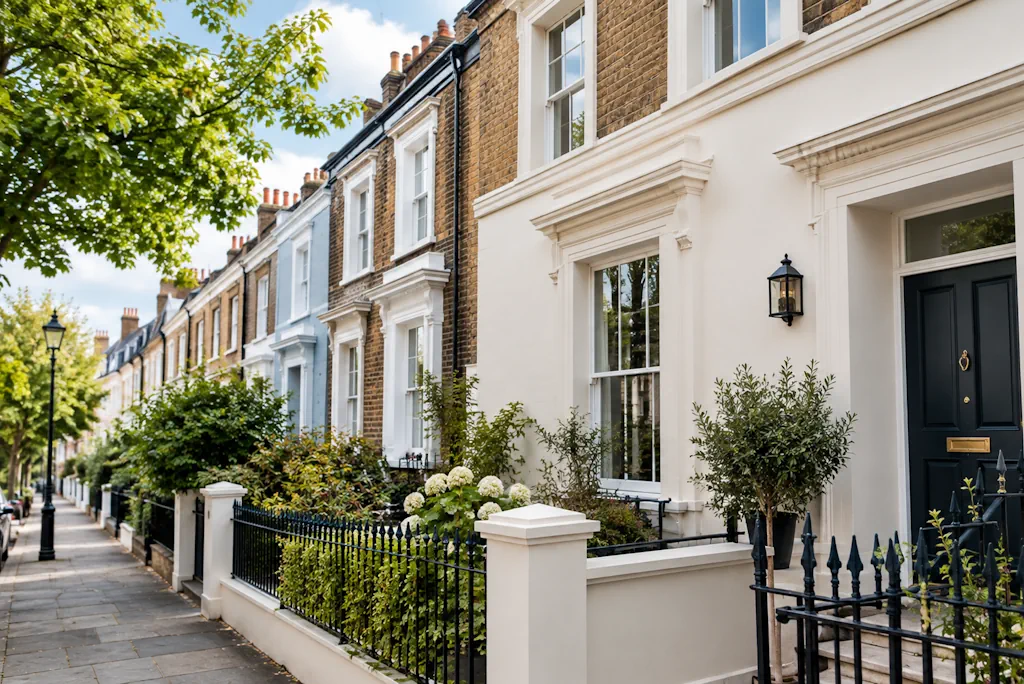
If an Article 4 Direction applies to your property, painting the exterior a different colour can require planning permission, even on an unlisted house. This is common in areas where uniform colour schemes matter to the area’s character – think rows of Georgian terraces or Regency-era seafront properties where a single garish colour choice would stand out and disrupt the whole street.
Check with your local planning authority before starting, or search the council’s website for an Article 4 Direction map covering your postcode. It takes minutes and avoids a genuinely expensive mistake.
Listed Buildings Are a Different Matter Entirely
If your house holds listed status, Grade I, Grade II, or Grade II listed, the rules shift significantly. Listed Building Consent is required for changes that affect the special architectural or historic interest of the building, and this can include repainting, particularly if you’re changing the colour or the paint type.
Traditional lime-rendered or lime-washed buildings need breathable paints. Modern masonry paints trap moisture behind them, causing damage to old brick or stone that took decades to develop its current character. Councils take this seriously, and unauthorised work on a listed building can result in enforcement action, including a requirement to reverse the work at your own cost.
Always contact the conservation officer at your local council before touching a listed property. They’ll advise on approved paint types, correct colours where historical records exist, and whether consent is needed for your specific plans.
What Counts as “Repainting” Under the Rules
Not every coat of paint triggers the same scrutiny. Repainting in the same or a very similar colour, using comparable materials, typically doesn’t need permission even where an Article 4 Direction exists. Problems arise when someone changes colour substantially, switches from natural stone or brick to a painted finish, or uses a different paint type altogether, such as moving from breathable limewash to plastic-based masonry paint.
Render is treated more cautiously than straightforward wall paint too. Adding render where none existed before, or painting over previously unpainted brick or stone, often needs consent because it alters the building’s appearance, not just its colour.
Front Doors, Windows, and Trim
Repainting doors, window frames, and other trim usually sits within permitted development, again assuming no Article 4 restriction and no listed status. Colour changes here draw less attention from planning authorities than changes to entire wall surfaces, though some conservation areas do specify approved colours for doors and windows as part of a design code.
Steps to Take Before You Start
Contact your local planning authority directly. Ask specifically whether an Article 4 Direction applies to your address and whether your property carries listed status. Councils publish conservation area appraisals online, documents outlining what makes each area special and what restrictions apply, and these are worth reading in full if you’re planning any exterior work.
Get advice in writing where possible. Verbal confirmation from a council officer is useful. A written response protects you if questions arise later, particularly if you’re planning to sell the property and a buyer’s solicitor asks about compliance.
The Cost of Getting It Wrong
Unauthorised changes in conservation areas can lead to enforcement notices, requiring you to restore the property to its previous condition, sometimes at considerable expense if specialist paint or materials are involved. For listed buildings, unauthorised work is a criminal offence, carrying potential fines and, in serious cases, prosecution.
Checking first costs nothing beyond a phone call or an email. Skipping that step can cost thousands and months of dispute with the council.
Final Thought
Conservation area status doesn’t ban homeowners from maintaining their properties. It sets boundaries around how that maintenance happens, protecting the character that made the area worth designating in the first place. A quick check with the local authority before you pick up a brush saves time, money, and a fair amount of frustration down the line.
