
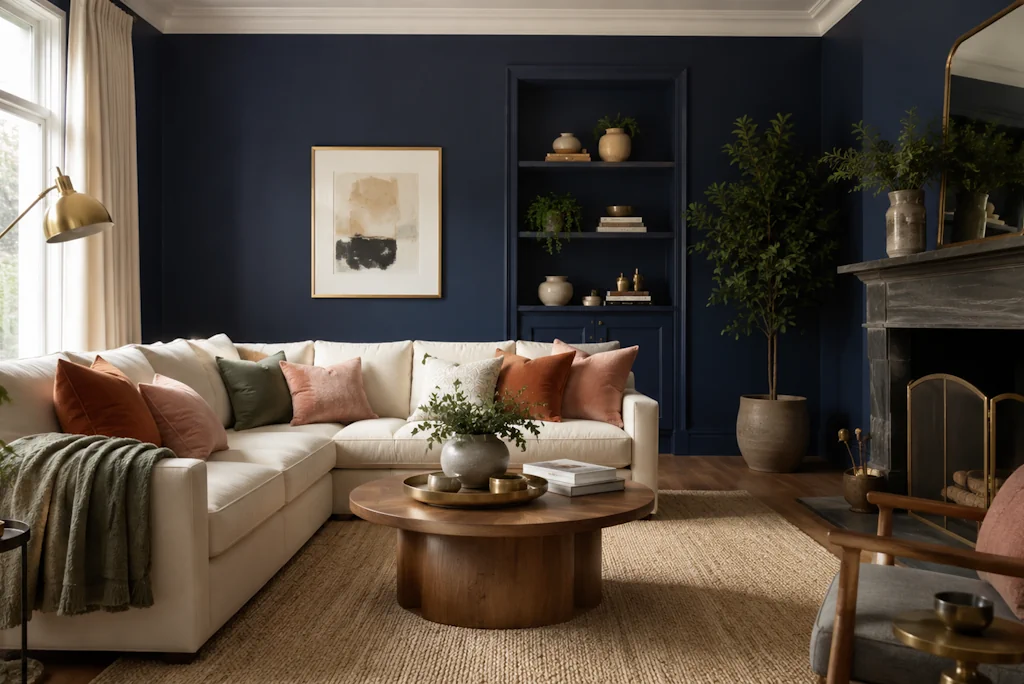
What Colours Go Best With Dark Indigo Walls?
Dark indigo is one of the most sophisticated wall colours you can choose. It sits between deep navy and rich violet, carrying the depth of both without committing fully to either. It absorbs light beautifully, creates an immediate sense of intimacy in any room, and works in living spaces, bedrooms, and studies. The key is knowing which colours to pair with it, because the wrong combination can make a dark indigo room feel heavy and closed in, while the right one makes it feel considered, warm, and genuinely stunning.
Warm White and Soft Cream
The most reliable pairing for dark indigo walls is warm white or soft cream on woodwork, ceilings, and furniture. This is not brilliant white. Brilliant white sits too cold and stark against indigo’s warmth, creating a contrast that feels clinical rather than considered.
Reach instead for whites with a hint of yellow, pink, or sand in their base. Shades like Farrow and Ball’s All White, Dulux Almond White, or Little Greene’s Linen sit beautifully alongside indigo, softening the contrast without losing the drama. Use these tones on skirting boards, door frames, ceiling roses, and built-in joinery to create a clean but warm boundary between the dark walls and the rest of the space.
Cream linen sofas and upholstered armchairs in pale oatmeal tones work exceptionally well in an indigo room. They anchor the space without competing with the walls.
Brass, Antique Gold, and Warm Metallics
Indigo and brass are one of the great interior colour pairings. The warm, slightly aged quality of unlacquered brass and antique gold pulls the yellow undertones from within indigo’s complex pigment, creating a connection between wall and accessory that feels entirely intentional.
Choose brass light fittings, door furniture, curtain poles, picture frames, and mirror surrounds. A large antique brass mirror on an indigo wall reflects light back into the room while adding warmth and visual weight in exactly the right proportion. Brushed gold works just as well for a slightly more contemporary finish.
Avoid chrome and cool-toned silver in an indigo room. These metals push the blue in indigo toward cold, and the room loses its warmth quickly.
Terracotta, Burnt Orange, and Rust
These earthy, fired tones sit opposite indigo on the colour wheel, making them natural contrast partners. The trick is to use them as accents rather than competing features.
Terracotta cushions on a linen sofa, a burnt orange ceramic lamp base, a rust-toned wool throw draped across a chair, or a grouping of earthenware pots on a windowsill all introduce warmth that feels grounded and organic against the deep blue-violet of indigo walls.
A single terracotta or rust-toned rug in a living room or bedroom works particularly well. It warms the floor plane and ties together the cooler wall tone with the warmer accessories above it. Look for rugs in Moroccan, kilim, or flatweave styles in burnt sienna, brick red, or ochre tones.
Forest Green and Olive
Deep botanical greens and muted olives share indigo’s depth and seriousness. Pairing them creates a rich, layered interior that feels both natural and considered.
This combination works especially well in dining rooms and studies. An olive green velvet dining chair against an indigo wall creates a moody, intimate atmosphere that works brilliantly in candlelight and artificial evening lighting. Forest green glassware, botanical prints in dark wooden frames, and plants with broad, dark leaves like fiddle leaf figs or monstera all add to this palette without overwhelming it.
Avoid bright or lime greens entirely. They clash sharply with indigo rather than complementing it, and the result looks accidental rather than styled.
Blush Pink and Dusty Rose
This pairing surprises people, but it works. Blush and dusty rose sit at the soft, muted end of the pink spectrum, and their warm, powdery quality balances indigo’s intensity with a gentleness that stops the room from feeling oppressive.
This combination suits bedrooms particularly well. Blush pink bedding against indigo walls creates a bedroom that feels romantic without being saccharine. Dusty rose curtains in a heavy linen or velvet fabric add softness and warmth to a window wall while keeping a luxurious mood.
Keep the blush tones muted and slightly greyed down. Bright or candy pinks immediately cheapen the combination.
Soft Grey and Pale Slate
For a more restrained, tonal approach, soft grey and pale slate work quietly and elegantly alongside dark indigo. This is a cooler palette that suits contemporary and Scandi-influenced interiors rather than warmer, more eclectic spaces.
Use pale grey concrete-effect flooring, slate grey linen curtains, and grey wool upholstery to create a room that feels calm and cohesive. Layer in texture through chunky knit throws, woven wall hangings, and matte ceramic accessories in pale grey and off-white to prevent the combination from feeling flat.
The risk with this palette is that it can become cold if you strip out every warm accent. Add warmth through natural wood tones, whether that is a light oak coffee table, wooden picture frames, or rattan pendant shades, to keep the room from tipping into austerity.
Natural Wood and Rattan
Raw, natural wood tones work beautifully against indigo walls, regardless of the rest of the colour scheme. Light oak, pine, ash, and bamboo all warm an indigo room immediately. A pale oak dining table, wooden floorboards in a natural finish, or open shelving in light wood. They all create a connection to natural materials that offset indigo’s intensity.
Rattan and cane furniture add a similar warmth with the bonus of textural interest. A rattan bedside table, cane-backed dining chairs, or a woven rattan pendant light all introduce a relaxed, organic quality that prevents an indigo room from feeling too formal or heavy.
Deeper Tones for a Tonal Scheme
If you want a room that feels truly immersive rather than high-contrast, build a tonal scheme around indigo using deeper, slightly different shades in the same blue-violet family.
Midnight blue bedding, navy velvet curtains, and deep plum cushions all sit within indigo’s tonal family while introducing enough variation to create depth and visual interest. This approach works best in rooms with good natural light or well-planned artificial lighting, as too many deep tones in a poorly lit room will simply disappear.
Add a large-format mirror to bounce light around a fully tonal dark room. Mirrored furniture, reflective lamp bases, and metallic accessories in brass or gold all help keep the space feeling alive rather than simply dark.
Lighting Considerations for Indigo Walls
Colour choice does not exist in isolation from light. Dark indigo walls absorb a significant amount of both natural and artificial light, which changes how every other colour in the room reads.
In rooms with limited natural light, warm-toned bulbs with a 2700K to 3000K colour temperature range bring out the warmth in indigo and make the room feel inviting rather than gloomy. Cool daylight bulbs push indigo toward grey-blue and flatten the whole palette.
Layer your lighting with table lamps, floor lamps, and wall lights rather than relying on a single overhead source. This creates pools of warm light that work with indigo’s depth rather than fighting against it, and the overall effect is considerably more flattering to every colour in the room.
